
Southington City Directory Collection
The strongest bibliographic lead is the National Park Service historic-nomination bibliography, which cites “Southington Directories, 1869-1962, New Haven: Price, Lee & Co.” The same research confirms an 1882 Southington volume. That evidence supports a historical series citation, not a claim that every year survives, is digitized, or sits on one open shelf.
| Collection | Years or era | Where held | Access |
|---|---|---|---|
| Southington city directories | 1869-1962 series cited | Library or archival shelf | Verify each volume |
| Confirmed 1882 directory | 1882 | Bibliographic and local-history lead | Ask for a scan or shelf copy |
| Catalog-discovery leads | 1883 through 1960, with gaps | Library or State Library catalogs | Not a guaranteed continuous run |
| Phonebooks and reverse material | Exact years not posted | Southington Local History Room | Staff verification in person |
| Digital companion collections | 1911-1990, by collection | Library-linked digital resources | Online or in-library |
Catalog leads include 1882, 1883, 1885, 1889, 1890, 1893, 1895, 1897, 1899, 1901, 1903, 1906, 1908, 1911, 1914, 1917, 1920, 1924, 1926-1930, 1933, 1936, 1938, 1940, 1942, 1945, 1947, 1949, 1951, 1953, 1955, and 1957-1960. Treat that list as a shelf-checking aid. A missing year may reflect a catalog gap, a lost volume, or a holding that was not exposed online.
The publisher and year tell only part of the story. A city directory is a historical association with a place, not a current resident list. It has no modern parcel ID, ZIP, tax value, phone field, or current-owner field. For a present-day question, pair the old entry with the record custodian that answers the separate question.
Southington's Local History Room
The Southington Public Library Local History Room is the main local stop for directories and genealogy material. It is at 255 Main Street, with a reference number of (860) 628-0947, extension 5. Listed main hours are Monday through Thursday, 9:00 a.m. to 8:00 p.m., and Friday, 9:00 a.m. to 5:00 p.m. The room is closed on weekends. Materials do not circulate. Staff can pull items, and visitors may scan, copy, or photograph holdings unless an item is fragile.
Holdings reach well beyond a directory volume. The library names phonebooks, maps, newspapers, obituaries, reports and plans, yearbooks, manuscripts, photographs, government documents, organizational records, and scrapbooks. That mix helps when a directory gives a name and street but not the reason a household moved, changed its name, joined an organization, or disappeared from a later volume.
The Southington Library Local History Room page is the best starting point for current access rules and reference help. A staff pull is often more useful than guessing from a catalog title, especially when a volume is listed as a phonebook, local history, or serial rather than under the exact catalog label.
The library's local-history holdings make the Southington city directory useful as one layer of a family record. A directory name can lead to a yearbook, obituary clipping, map, or organization file without turning any one item into proof of a present address.
The Connecticut State Library is the next research channel for a volume that is not at the local desk. Its History and Genealogy staff can be reached at CSL.ISREF@ct.gov and (860) 757-6580. Archives questions go to CT.Archives@ct.gov. Compact shelving and off-site retrieval can affect timing, so ask staff to confirm whether a requested directory or town document is immediately available.
The Connecticut State Library History and Genealogy gateway brings together guides for local directories, census, churches, old houses, probate, maps, newspapers, and town documents. It is also a useful fallback when the local shelf has a gap.
The State Library History and Genealogy gateway image below points to the research route. Its value for a Southington local-directory search is the staff and guide network behind the catalog, not a promise that every local volume is scanned.
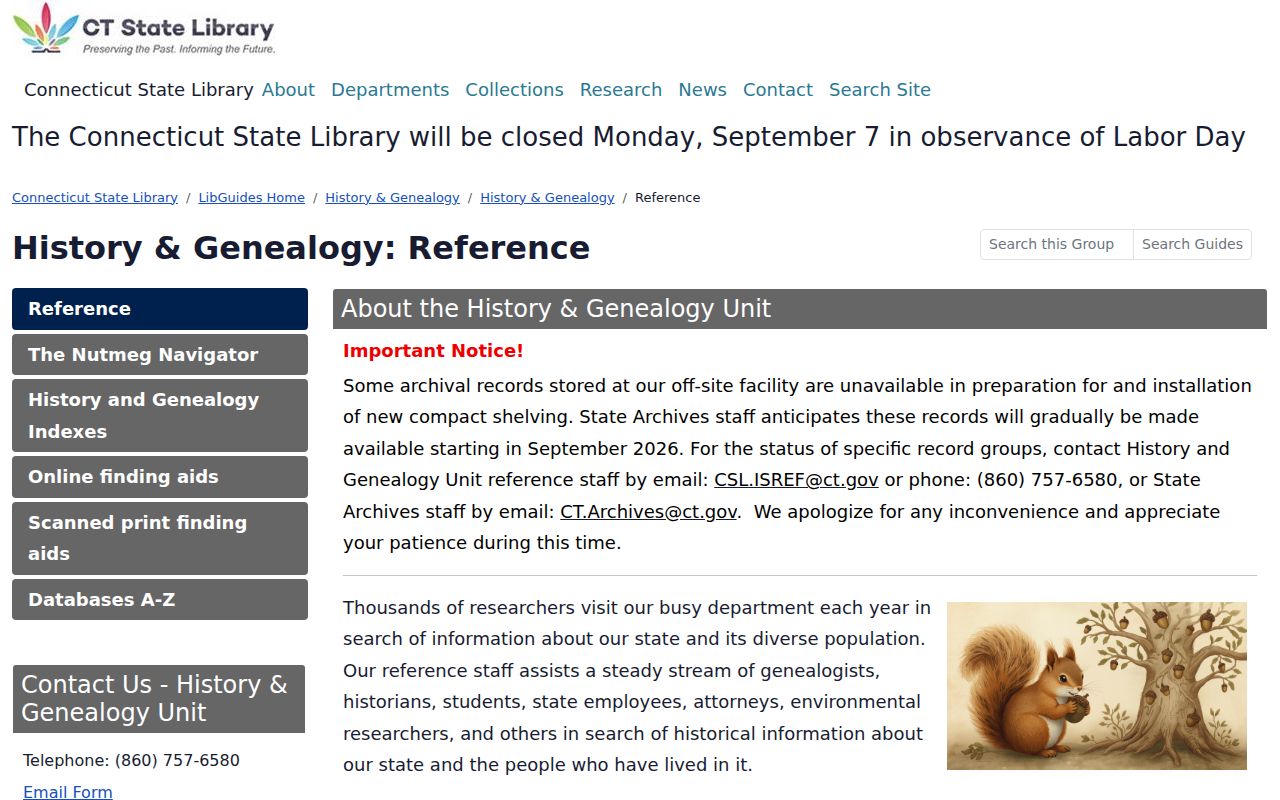
Use the gateway to ask a focused question about a year, publisher, village label, or related town record. A narrow request gives the library a better chance to identify the correct shelf or archive box.
Digitized Southington Directories
Several library-linked collections can fill the years around a printed volume. Southington High School yearbooks cover 1951-1989. Lewis High School's Chronicle covers 1926-1990, and The Emblem covers 1911-1975. The Record of the Southington Ladies' Aid Association Reunion covers 1884-1932, with a Ladies' Aid register from 1900. Town school reports cover 1916-1970. These are not resident rosters, but they can place a surname in a school, club, institution, or civic setting.
The library's genealogy resources page also identifies Ancestry Library as an in-library service. Its research mix includes census, voter material, birth, marriage, death, immigration, naturalization, selected court, land, probate, and military resources. Vendor access rules make this a library channel rather than an unrestricted home search.
The Southington Library genealogy resources page links the available databases and explains the difference between a local visit and a public web index. The Advantage Preservation local collection is another library-linked search route. Use its search as a lead and verify a result with the library or the original volume.
A former classmate or family member may be easier to locate in a yearbook than in a printed directory. Check several years, then compare the listed activity or household clue with a directory address, an obituary, or a town document. A school volume describes participation at a particular time. It does not establish a current home.
The Southington Library genealogy resources image below shows the in-library research route for these companion collections.
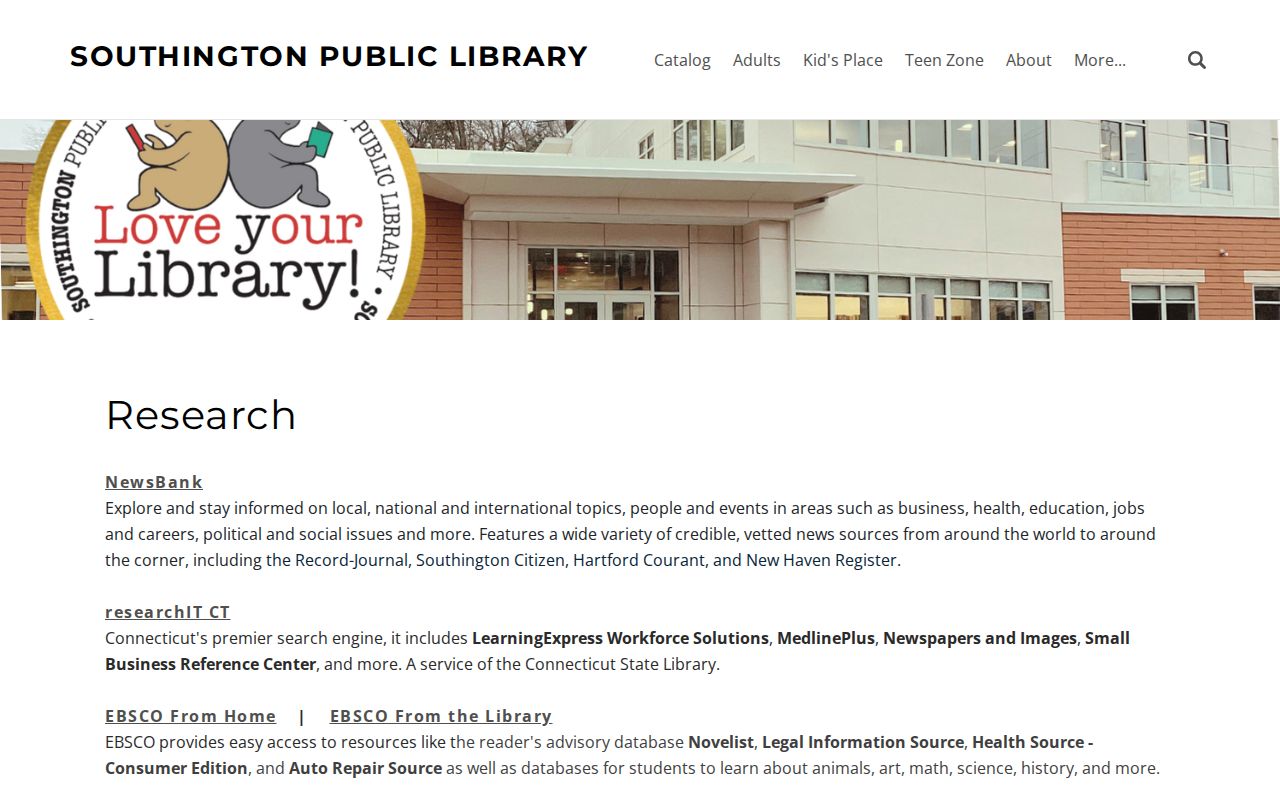
The library resource view supports a human-use search: reconnecting with a former classmate, tracing a club, or testing a family story with dated local material.
Reading a Southington City Directory
The 1882 format shows why a historical directory is more than an alphabetized name list. A headword resident is followed by an occupation or business role, a residence or boarding location, and household or relationship notes when supplied. The front matter describes a house-to-house canvass. That method explains the practical detail, but it does not turn the entry into a deed or a complete household census.
| Headword | The resident's name starts the entry and may preserve an older spelling or initial. |
|---|---|
| Role | An occupation or business role follows the name and helps separate people with the same surname. |
| Residence | The line gives a street or location, or says that the person boards elsewhere. |
| Household note | Spouse or widow notes may appear in the directory's own style. |
| Ownership limit | There is no modern owner, parcel, ZIP, tax, phone, or current-resident field. |
- Criss-cross directory
- An address-first arrangement that lets a researcher move from a street or house to a listed name when a volume includes that section. Ask the library to confirm which Southington volumes have it.
- Householder index
- A name-centered finding aid for the people treated as household heads or principal entries. It is an index, not a full list of every person present.
- Abbreviation key
- The front matter that explains marks such as h. for house, bds for boards, c for corner, n for near, r for rear, opp for opposite, St for street, Sq for square, pl for place, ave, emp, and mfg.
Village shorthand matters. Plantsville, Milldale, and Marion can appear as local labels rather than as one uniform Southington center address. A figure may identify a school district, while a figure after a street word can suppress the repeated word. Photograph or copy the abbreviation key before working through entries so the same mark is not read two different ways.
Read the exact line, then record the source year and page. A directory's house or boarding notation shows an association reported by that volume. It does not prove title, a continuous stay, or the identity of every person in a building.
The Southington Historical Society is a useful second stop for a hard-to-read local reference. Its research library and documentary, family, and local-history holdings can supply context when a printed line points to a person, house, or organization but the printed volume leaves the story open.
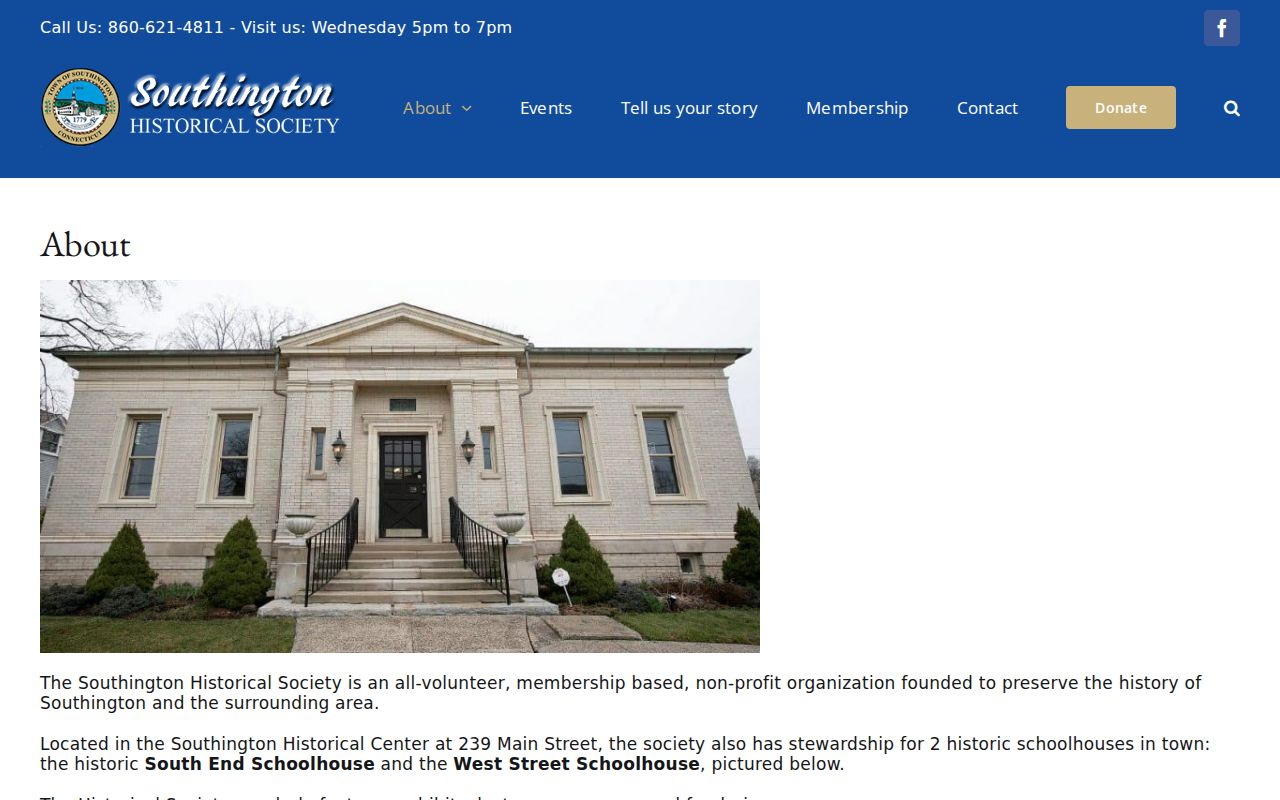
Historical Society staff can confirm current visiting details before a trip. The listed address is 239 Main Street, the phone is (860) 621-4811, and the current site lists Wednesday hours from 5:00 to 7:00.
Southington's Village Directories
Place names can be the key to a successful historical-directory search. Southington center, Plantsville, Milldale, and Marion are not interchangeable labels in older material. The Plan of Conservation and Development describes Marion as a southwest-corner crossroads settled around 1739, Milldale as a south-central area tied to early industry, and Plantsville as a recognizable village center.
The 1882 abbreviation system gives these villages their own shorthand. A surname that seems to vanish from a Southington directory may have moved from the center to Plantsville, Milldale, or Marion, or may be indexed under a nearby street description. Search the village wording, the street wording, and the full town name before deciding that a household is absent.
This geography is a human-use feature of the records. It can help connect a family story to a mill, school district, church, cemetery, or old road without claiming that a village label marks a modern municipal boundary.
Southington Directory Companions
A printed directory becomes stronger when another dated source answers a different question. Yearbooks can show a class or activity. The Chronicle and The Emblem can place a name in a school or organization. Ladies' Aid reunion material can preserve a group connection. Newspaper notices and obituaries can explain a death, move, marriage, or family relationship.
The library names cemetery and memorial records, and Oak Hill Cemetery at 95 Flanders Street has its own search tool and find-a-grave route. St. Luke Church, at 99 Bristol Street, directs cemetery questions to the parish and identifies connections with other local cemeteries. These records should be compared with a death certificate or newspaper notice, because a burial place is not the same as a residence.
The Barnes Museum, 85 North Main Street, offers another context layer. Its archives and material culture holdings can help with a household, business, or building story. Listed hours are Wednesday through Friday, 1:00 to 5:00, or by appointment. It is a historical collection, not a modern directory search.
The Southington Public Library Local History Room page shows the local reference route behind these companion holdings.
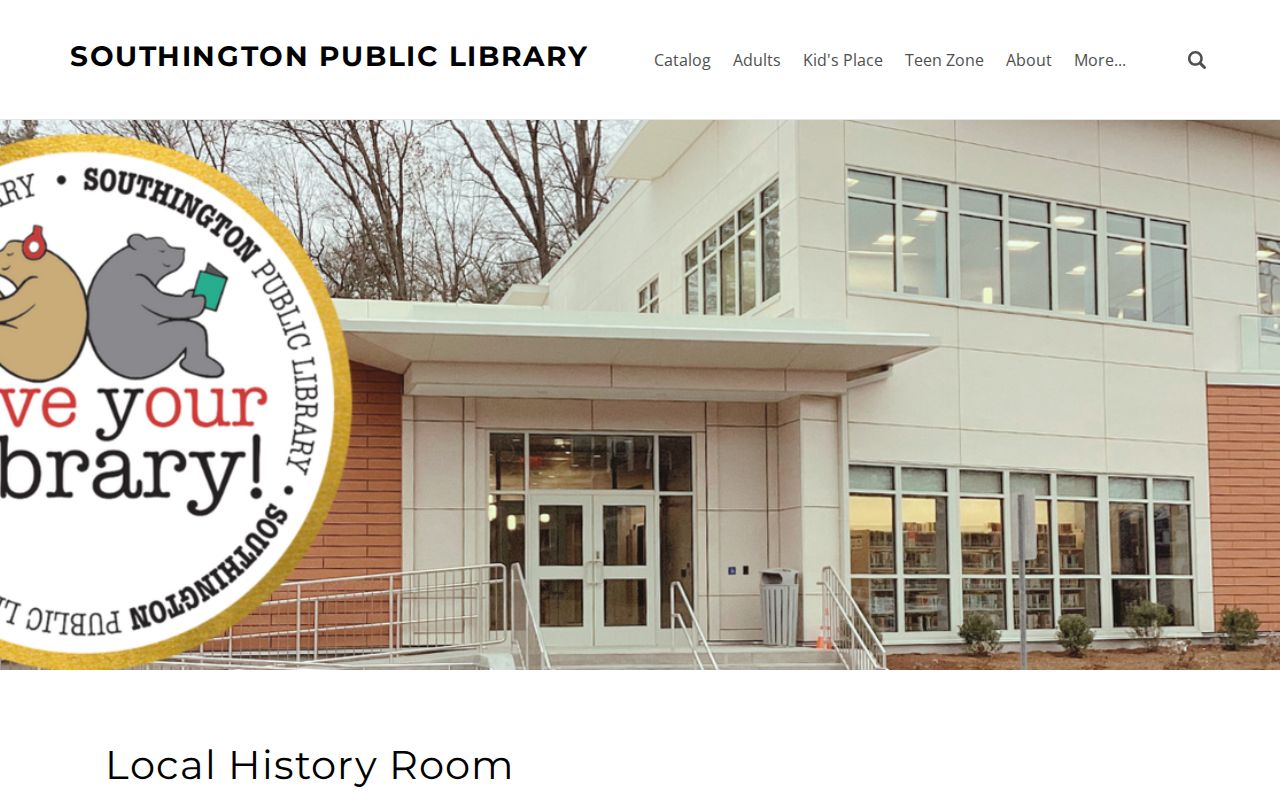
The Local History Room image reflects the kind of companion material that can sit beside a Southington directory. Ask for the smallest set of names, dates, and addresses needed for the question.
Southington Directory Cross-Checks
The federal census supplies decennial snapshots from 1850 through 1950. Under the 72-year release rule, 1950 is the latest full public census in August 2026. Pair a directory year with the nearest census, but do not treat the gap between them as proof that a person stayed at the same address.
Deeds and assessor records test a different relationship. The Town Clerk's land records can show grantors, grantees, dates, book and page references, and legal descriptions. Vision can show a current tax-record owner or co-owner, parcel connection, and mailing or situs address, meaning the property's location label. A directory entry can suggest where to look, while a deed can document a conveyance. Neither source alone proves everyone who lived in a house.
| Directory | Listed association with a name, place, role, and household note. |
|---|---|
| Census | Household snapshot for a released census year, with age and relationship context. |
| Assessor | Tax-record owner, parcel, mailing or situs fields, and sale references. |
| Deed | Recorded parties, conveyance details, book/page, and legal description. |
When a historical name needs a modern record relationship, the Southington resident lookup can route the question to the appropriate current custodian instead of making the old directory carry too much weight.
Tracing Southington City Directories
Follow a household across selected years rather than assuming a complete annual sequence. Write down the exact name, address, village label, role, spouse or widow note, and any house or boarding mark. Preserve spelling variants. A changed initial or a move from Southington center to Plantsville may be more meaningful than a perfect match in a single volume.
- Start with the first confirmed directory year and copy the entry as printed.
- Check the nearest earlier and later cataloged years, including the village shorthand.
- Pair those entries with the closest released census years from 1850 through 1950.
- Test ownership or a transfer with the assessor card and Town Clerk book and page.
- Use newspapers, probate, cemetery, and vital records to explain a death, marriage, heir, or name change.
A disappearance has several possible meanings. The person may have moved, died, been omitted, changed a surname, or fallen outside the volume's canvass. An obituary, probate row, cemetery record, later directory, or deed can narrow the reason. A single missing year is not evidence of a break in family history.
Keep the source roles separate in notes. The directory describes its own reported listing. The census describes one household snapshot. The assessor describes the tax record. A deed documents a recorded transaction. A vital certificate confirms an event only when the requester meets the access rules.
Southington's Historical Trail
Online access includes library-linked yearbooks and serials, the Advantage Preservation local collection, FamilySearch catalogs and indexes, Library of Congress map records, State Library guides, newspaper archives, and public census interfaces. FamilySearch catalog 468555 covers Southington births, marriages, and deaths from 1847-1900, while Barbour catalog 107402 covers 1779-1857. Those are historical routes, not modern certified copies. The 1895 Southington Sanborn map record is another historical address and built-place aid.
In-person access runs through the Local History Room, Historical Society, Barnes Museum, FamilySearch Center, State Library, and State Archives. The FamilySearch Center at 750 Meriden-Waterbury Turnpike is listed at (860) 628-0617, with Wednesday hours from 6:30 to 8:30 p.m. It can provide technology and record access that is not the same as a home search.
Phone and email are appropriate when a shelf, archive box, or copy rule is unclear. Mail, fax, or a focused Connecticut Freedom of Information request can help with a defined municipal record, but a request should name the record set and date range. A library should not be asked to produce a protected vital certificate. Fragile holdings may also have copying limits.
Southington Library
255 Main Street
(860) 628-0947, Reference Desk ext. 5
Monday-Thursday 9:00-8:00, Friday 9:00-5:00
Historical Society
239 Main Street
(860) 621-4811
Wednesday 5:00-7:00, confirm before visiting
State Library and Archives
CSL.ISREF@ct.gov
CT.Archives@ct.gov
(860) 757-6580, off-site retrieval may apply
Start with a dated question, a name variant, and the village or street clue already in hand. That approach makes a Southington city directory a useful bridge between family memory and records that can be checked by the proper custodian.